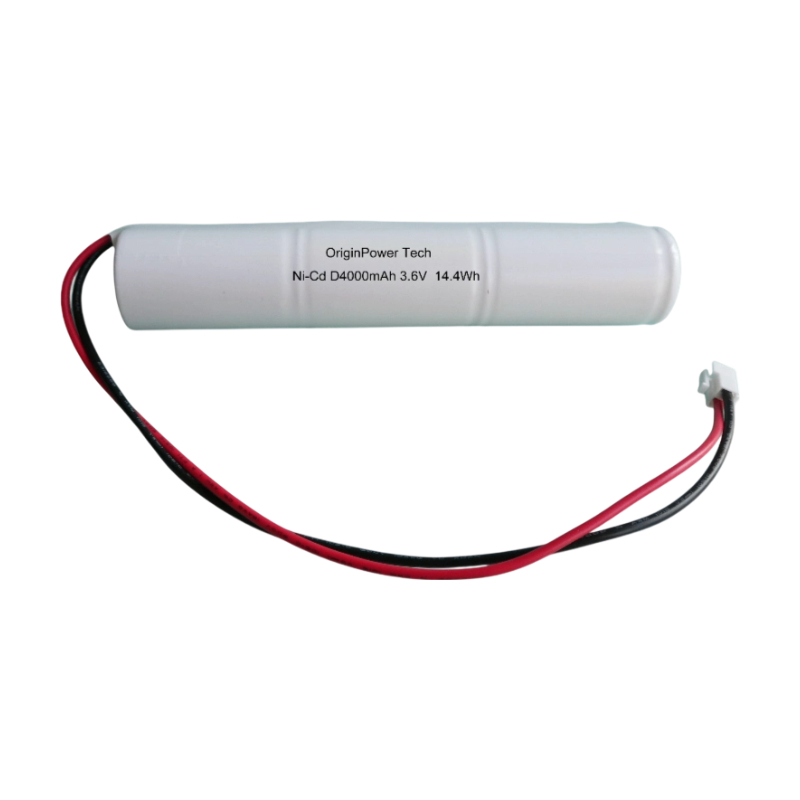
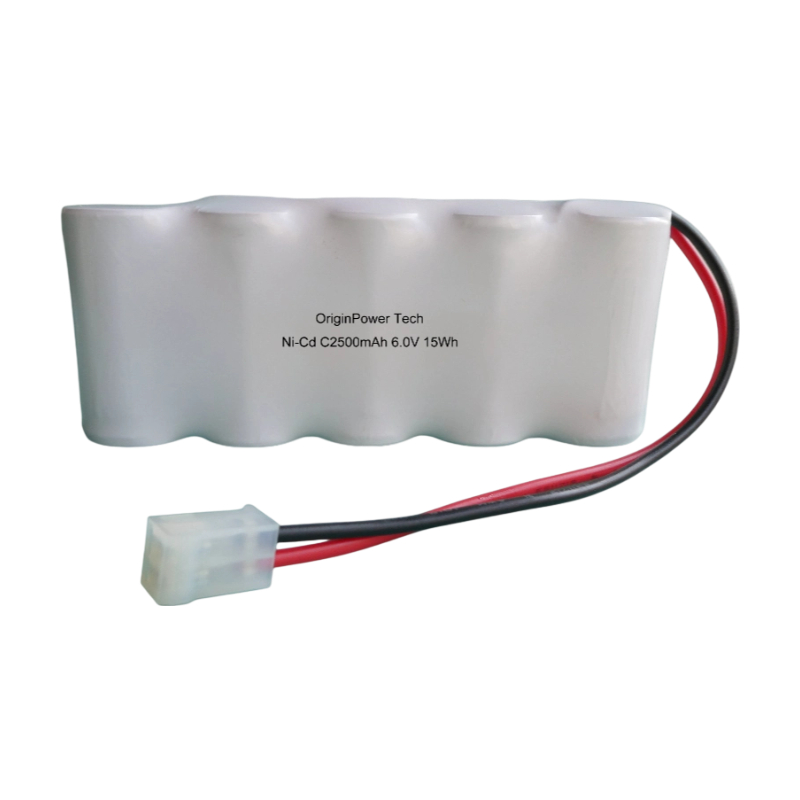
Product Description
|
Cell Model: |
Ni-CD SC |
|
Nominal Capacity: |
1200mAh /1500mAh/1600mAh/1800mAh/2000mAh |
|
Nominal Voltage: |
1.2V/2.4V/3.6/4.8V/6.0V/7.2V/9.6V/12V |
|
Cycle Life: |
≥ 500 cycles (≥60% capacity retention)) |
|
Single Cell Internal Resistance: |
≤ 20 mΩ |
|
Single Cell Dimension |
Ø22.1 ± 0.2mm × 42.5 ± 0.5mm |
|
Battery temperature type: |
Standard temperature/ 55°C ( T type)/ 70°C ( U type) |
|
Note: |
Accept customization |
The Nickel-Cadmium (Ni-Cd) SC Rechargeable Battery offers reliable power and long-lasting performance for a wide range of industrial and consumer applications. With capacities ranging from 1200mAh to 2000mAh, it provides excellent durability and stable voltage output. Designed with high-quality materials and strict production standards, our Ni-Cd SC cells deliver strong discharge capability, long cycle life, and consistent performance even under extreme temperatures.
As a factory-direct supplier, we offer competitive pricing and flexible customization options, including battery packs with solder tabs, connectors, or insulation sleeves. This makes our SC Ni-Cd batteries ideal for power tools, emergency lights, medical equipment, cordless devices, and solar-powered systems.
1. Exceptional Cycle Life: Capable of over 500 charge-discharge cycles, its durability far exceeds that of ordinary batteries, significantly reducing long-term costs and replacement frequency.
2. Remarkably Stable Performance: Delivers a flat discharge voltage curve, ensuring consistent and stable power output throughout the usage cycle, preventing performance issues in devices due to voltage fluctuations.
3. Broad Operating Temperature Range: Can start up and discharge normally even in low temperatures of -20°C, while also maintaining good stability in high-temperature environments, adapting to various harsh conditions.
4. Excellent Fast-Charging & High-Rate Discharge: Supports rapid charging and stable high-rate discharge, providing robust power for devices like power tools and emergency equipment that require instant high current.
5. Superior Tolerance to Overcharge/Over-discharge: Compared to other chemistries, Ni-Cd batteries offer greater tolerance to overcharge and over-discharge, providing higher fault tolerance and reliability in backup or improper use scenarios.
6. Factory direct supply with competitive price and OEM support
1. Lighting:Emergency lights, Lawn lights/Landscape lights, LED lights, Solar-powered lights, Backup power supplies, Miner's lamps, Flashlights, Fishing lights,Garage lights
2. Electric Toys: Remote control cars, Remote control boats, Aircraft models, Game controllers/Gamepads, Handheld game consoles
3. Audio-Video & Digital Products, Digital cameras,Camcorders, DVD players, VCD players, MD (MiniDisc) players, CD players, MP3 players, PDAs (Personal Digital Assistants), Laptop computers, Microphones
4. Power Tools: Hand drills, Planers, Chainsaws, Impact drills, Lawn mowers, Electric screwdrivers
5. Communication Equipment: Cordless phones, Mobile phones, Walkie-talkies (Two-way radios)
6. Household Appliances: Electric hair clippers, Electric shavers, Electric toothbrushes, Electric eyelash curlers, Robotic vacuum cleaners, Vacuum cleaners, Repeat learning machines (Language repeaters) Remote controllers, Wall clocks, Radios.
● State of Charge: The battery should be stored with a partial charge. The ideal State of Charge (SoC) is approximately 40% - 50%.
● Never store a fully charged battery: A fully charged state accelerates battery degradation, leading to permanent capacity loss.
● Never store a completely discharged battery: Storing a fully discharged battery (0V) will cause a "sleep effect," making it difficult to recharge and potentially causing permanent damage.
● Temperature: Store in a cool, dry environment. The optimal storage temperature is 10°C to 25°C. Avoid high temperatures (accelerate self-discharge and aging) and freezing.
● Humidity: The environment should be kept dry, avoiding moisture to prevent contact corrosion.
● Regular Checks and Recharges: Due to self-discharge, the battery will slowly lose charge during storage. It is recommended to check the voltage every 1-3 months. If the voltage drops significantly, it should be recharged to restore it to 40%-50% of its original capacity.
● Physical Placement: Remove the battery from the device, clean the electrodes, and place it in an insulated container to avoid short circuits.